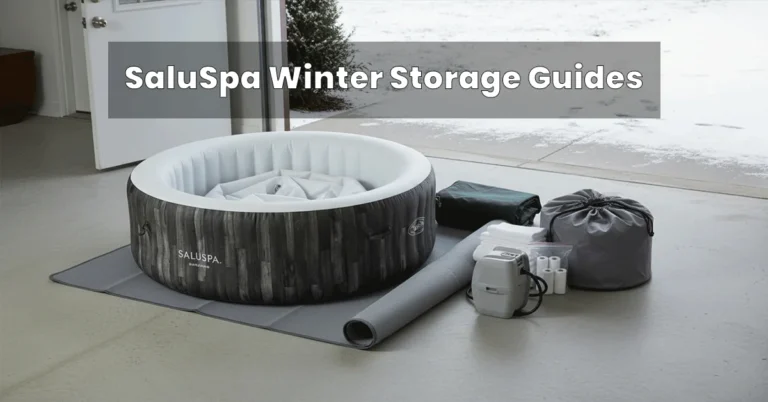
Understanding how to store a SaluSpa hot tub for winter is essential to protecting your investment. The right winter storage will prevent damage due to freeze, prevent damage to the materials, and avoid expensive repairs, all while ensuring relaxation for years to come.
From how to insulate inflatable hot tubs for winter to tips for maintaining a hot tub in the winter months, this guide is designed to help you make informed decisions about the seasonal care of your hot tub.
SaluSpa Hot Tubs for Canadian Winters
As for Canadian winters, there is extra care needed when closing your SaluSpa hot tub for winter. The extreme cold can cause your portable hot tub to suffer from permanent damage if SaluSpa cleaning Solutions isn’t properly prepared.
Winter Challenges:
- Heating is lost at -20C – heating assistance is lost at -28C
- Freezing period of 4 – 6 months
- Frost plugs heating units and waterlines
- Structures of brittle materials require replacement
- Total structural failure due to gravity
Storage versus Continuous Use:
| Factor | Storage | Continuous Use |
| Energy Costs | $0 | $150 to $300 Monthly |
| Maintenance Time | 3 to 4 hours initially | 2 to 3 hours weekly |
| Wear and Tear | None | Moderate to High |
| Freeze Risk | None | High |
| Spring Setup | 2 to 3 hours | Time is not an issue |
Read More: SaluSpa Maintenance & Cleaning Guide
Inflatable Hot Tub Insulation
Retrofitting a standard inflatable spa for winter insulating involves creating thermal barriers to avoid freezing of water in the system. This is different from the standard hot tub winterization process.
Insulation Methods:
- Thermal Ground Mats: To avoid frost under the tub, put in insulated pads.
- Foam Board Panels: Put rigid foam insulation (R-10 or higher) along the outside.
- Reflective Covers: Put multi-layered thermal blankets under the cover.
- Wind Barriers: In the winter, put around your inflatable hot tub temporary windbreaks.
- Heated Base Systems: For continuous winter use, think about electric heating pads.
Recommended Insulation Materials:
| Material Type | R-Value | Cost Range | Best For |
| Foam Board | R-10 to R-15 | $40-80 | Permanent installations |
| Reflective Bubble Wrap | R-4 to R-6 | $20-40 | Budget-conscious users |
| Thermal Spa Blankets | R-8 to R-12 | $60-120 | Ease of use |
| Spray Foam Insulation | R-20+ | $150-300 | Maximum protection |
Maintaining a Hot Tub in the Winter
Maintaining a hot tub in winter is about water chemistry, heating efficiency, and equipment function. Winter conditions make chemical depletion go faster and heating demands go higher.
Weekly Winter Maintenance Checklist:
- Test and balance pH levels (7.2-7.8 optimal range)
- Check sanitizer levels twice weekly
- Inspect heating elements for ice formation
- Monthly cleaning and/or replacement of filter cartridges
- Monitor water level and refill as necessary
- Remove snow from the cover as it builds up
- During cold snaps, check that the pump pump is working
Winter Water Chemistry Guidelines:
If chemicals are properly balanced, freezing point depression is prevented and water clarity is maintained. Winter is when sanitizer levels need to be boosted by 20% since it is more difficult to dissolve chemicals in cold water. Alkalinity needs to be checked weekly, especially since the pH can bounce up and down quickly when the temperature is fluctuating in your winter hot tub.
Closing Your SaluSpa Hot Tub for Winter
Closing a SaluSpa hot tub for winter requires the removal of all water, draining the system, and packing it all away to protect it for the winter.
Step-by-Step Closing Process:
- Drain completely: Utilize the drain valve and pump to remove all water
- Clean thoroughly: Use a non-abrasive chemical to clean the surfaces
- Dry interior: Use towels, and then air dry for 24-48 hours
- Remove components: Filters, headrests, and other accessories
- Deflate properly: Release the air slowly to avoid stressing the material
- Apply protectant: Spray all surfaces with the vinyl protectant
- Fold carefully: Avoid creasing by following the instructions to the letter
- Store indoors: Put the items in a climate controlled location (basement, garage)
- Cover and protect: To prevent mildew, use storage bags that are breathable to keep the items dry and clean
- Label accessories: for all components, keep the boxes and bags of the components for easy and organized assembly in the Spring
SaluSpa Hot Tub Maintenance in Winter
Hot tubs have different Winter maintenance protocols when operating to when they are for storage.
Active Use Maintenance Schedule:
| Task | Frequency | Time Required |
| Water Testing | 3x weekly | 5 minutes |
| Filter Cleaning | Every 2 weeks | 15 minutes |
| Cover Inspection | Daily | 2 minutes |
| Shock Treatment | Weekly | 10 minutes |
| Full Water Change | Every 8 weeks | 3 hours |
Equipment Protection Measures:
- Keep heater running continuously during sub-zero temperatures
- Install insulated covers between uses
- Use antifreeze in external plumbing (non-toxic spa antifreeze only)
- Protect control panels from ice and snow accumulation
- Maintain minimum water temperature of 80°F to prevent freezing
Related Post: Water Cleaning Guide
How to Store Your Outdoor Hot Tub in Winter?
Storing your outdoor hot tub properly extends its lifespan by 3-5 years compared to improper storage methods.
Optimal Storage Conditions:
- Temperature: 40-70°F (prevents material degradation)
- Humidity: 30-50% (reduces mildew risk)
- Light Exposure: Complete darkness (prevents UV damage)
- Air Circulation: Moderate airflow (prevents moisture buildup)
- Storage Position: Flat or slightly elevated (no compression points)
Storage Location Rankings:
- Climate-controlled basement or storage room
- Heated garage with moisture control
- Insulated shed with heating
- Covered outdoor area with weatherproofing (least preferred)
FAQs
Here are Some frequently asked questions given below:
Can I leave my SaluSpa Inflated all Winter if I Drain It?
No, deflating prevents material stress and damage from freezing temperatures and snow weight.
How long Does Winterizing a SaluSpa Take?
Complete winterization takes 3-4 hours including draining, cleaning, drying, and storage preparation.
What is the Coldest Temperature Hot Tubs Can Be?
Active heating is required below 32°F. Damage is likely below -10°F, even if the material is insulated.
Should I Get Anti-Freeze for my SaluSpa?
Yes. Just use RV/marine anti-freeze that is propylene glycol and non-toxic is needed for waters for recreation.
Can I Store my SaluSpa Outside in the Winter?
Only in a location that is a castle and can be covered, with waterproof, UV-resistant tarps.
Conclusion
Storing your SaluSpa hot tubs during the winter will ensure your hot tubs will last thru the cold months, and even allow your hot tub to be used for multiple years. These instructions and guidelines will only allow the inflatable hot tub to get used all year, with no risk of injuring extremely cold mud.
Extreme hot tubs, extremely cold, and make Canadian winters and hot water combined, it will make hot tubs feel cold. The process of winterizing can be started before cold compost is to be installed to allow a full hot tub all winter long.
About Author